
Why Do Cats Drool? From Contentment to Concern
From the happy dribble of a contented cat to the drooling that signals a sore mouth or something more serious, here is how to tell the two apart and when to call your vet.
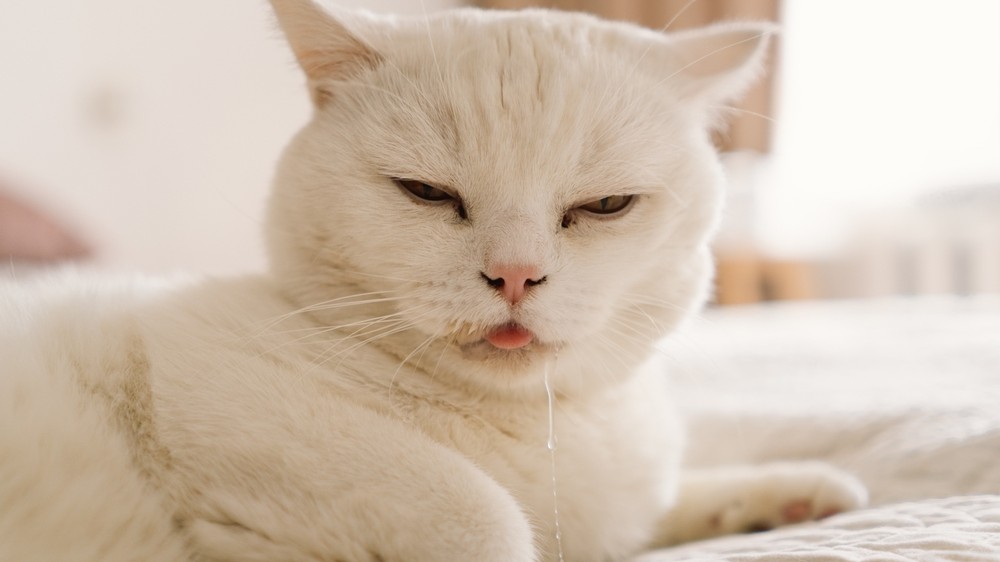
Most cat owners will spot a bit of drool at some point. A cat settled on your lap, purring and half asleep, will sometimes dribble a little while being stroked, and that's nothing to worry about. At other times, drooling is an early sign that something in the mouth or the body isn't right.
Drooling can come from a sore tooth, a poison, a queasy stomach or a recent trip to the vet, and each one looks a little different.
The happy dribble
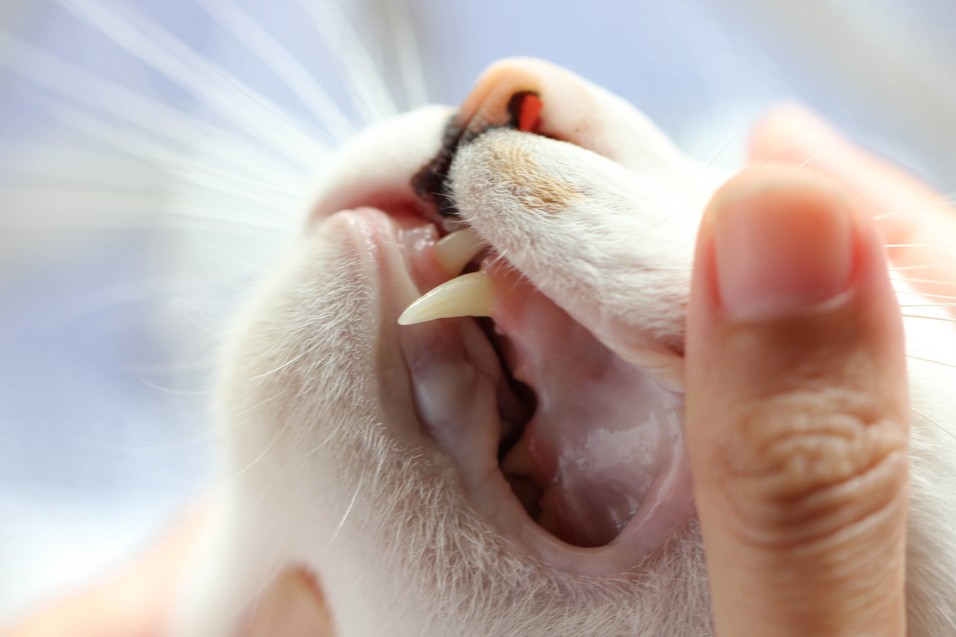
Plenty of cats drool a little when they're relaxed and content. It usually shows up during a good cuddle, while they knead a blanket with their paws, or as they purr themselves towards a nap. The favourite explanation goes back to kittenhood. Kittens knead, purr and dribble while nursing, so a deeply comfortable adult cat can slip back into that same soothed state.
This kind of drooling has a few reassuring hallmarks. It tends to be light rather than a stream, it only appears when your cat is calm and happy, and it stops once they get up and carry on with their day. Your cat is otherwise their normal self, eating well, grooming and behaving as usual. If that describes your cat, the occasional happy drool is part of who they are and nothing to worry about.
Some cats also drool for a moment when they smell food, in the same way our own mouths water. Drooling is worth a closer look when it changes, and there are a few signs a vet would want to hear about...
Download and sign up to the My Feline app to read the full article...
Research rating: ⭐⭐⭐⭐ (4 of 5). Last updated 25 August 2026.
Sources
- O'Neill DG, Blenkarn A, Brodbelt DC, Church DB, Freeman A. Periodontal disease in cats under primary veterinary care in the UK: frequency and risk factors. https://doi.org/10.1177/1098612X231158154
- Soltero-Rivera M, Goldschmidt S, Arzi B. Feline chronic gingivostomatitis: current concepts in clinical management. https://doi.org/10.1177/1098612X231186834
- Boland LA, Angles JM. Feline permethrin toxicity: retrospective study of 42 cases. https://doi.org/10.1016/j.jfms.2009.09.018
- Tutu P, Daraban Bocaneti F, Altamura G, Dascalu MA, Horodincu L, Soreanu OD, Tanase OI, Borzacchiello G, Mares M. Feline oral squamous cell carcinoma: recent advances and future perspectives. https://doi.org/10.3389/fvets.2025.1663990
- Simon BT, Steagall PV. Feline procedural sedation and analgesia: when, why and how. https://doi.org/10.1177/1098612X20965830