
Training Cats: What Works Best
Understanding effective ways to teach cats new behaviours through positive reinforcement.
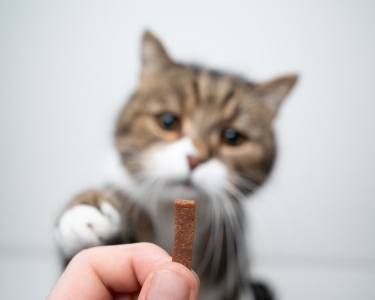
Cats have a reputation for doing as they please, and it turns out they learn new behaviours perfectly well when the method works with their instincts rather than against them.
Whether you'd like your cat to come when called, learn a trick or two, or settle into better habits around the house, research on shelter cats provides a picture of what can work.
The Science Behind Successful Cat Training

Positive reinforcement means rewarding your cat the moment they do what you'd like, so they're more likely to do it again.
Clicker training is a version of that. A click marks the exact moment the cat gets it right, and a treat follows straight after. The precise timing helps the cat connect what they just did with the reward.
In 2017, researchers in Colorado taught four behaviours to one hundred shelter cats using a clicker. Each cat had fifteen five-minute sessions over two weeks. Seventy-nine per cent learned to touch a target with their nose, sixty per cent learned to spin in a circle, thirty-one per cent learned to give a high-five and twenty-seven per cent learned to sit on cue.
Age and sex made no difference. Kittens, older cats, males and females all learned at similar rates. Interest in food did make a difference for two of the behaviours, and the cats keener on treats learned those faster, though a few took petting as their reward instead.
The method is only part of it, though. Timing, setting and the cat's own temperament all play in...
Download and sign up to the My Feline app to read the full article...
Research rating: ⭐⭐ (2 of 5). Last updated 25 August 2026.
Sources
- Kogan L, Kolus C, Schoenfeld-Tacher R. Assessment of Clicker Training for Shelter Cats. https://doi.org/10.3390/ani7100073
- Haywood C, Ripari L, Puzzo J, Foreman-Worsley R, Finka LR. Providing Humans With Practical, Best Practice Handling Guidelines During Human-Cat Interactions Increases Cats' Affiliative Behaviour and Reduces Aggression and Signs of Conflict. https://doi.org/10.3389/fvets.2021.714143