
Toys That Move: Understanding Interactive Play and Laser Pointers
What research tells us about how cats play, why movement matters, and the potential concerns around laser pointer toys
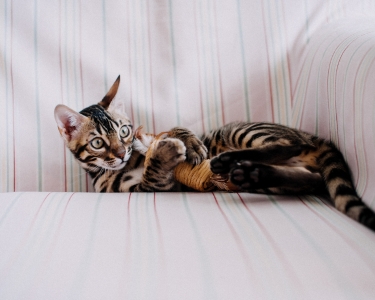
Most cat owners have watched their cat chase something across the floor and wondered what is going on in that head. Laser pointers are a good example of why play matters. A moving red dot sends many cats straight into a chase, so the toys sell well. A chase that never ends in a catch, though, has raised questions about whether the game leaves cats frustrated. Research has looked at what play does for a cat, what cats prefer when given a choice and whether laser pointers are linked to unwanted habits.
How Cats Experience Play
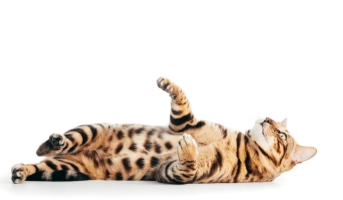
Researchers who study animal welfare treat play as a good sign. Cats tend to play most when they are fed, comfortable and not under threat, so a cat who plays is usually a cat who is doing well. There is also evidence that animals who play more go on to be healthier and calmer, so play seems to do cats good in itself.
Researchers describe three kinds of play. Object play is batting a toy about. Locomotor play is running, leaping and rolling for its own sake. Social play is the rough and tumble between cats, or between a cat and a person.
For a long time, play in cats was assumed to be practice for hunting. Later studies compared kittens who had played a great deal with kittens who had played very little, and both groups grew into similar hunters. Social play in particular seems to have more to do with learning to get on with others and cope with new or stressful situations.
Cats have clear tastes in toys. They tend to go for things that are mouse-sized, that move and that they haven't seen before. But when researchers gave fifty cats a choice between human company, food, toys and scents, the result was not what most people would expect...
Download and sign up to the My Feline app to read the full article...
Research rating: ⭐⭐⭐ (3 of 5). Last updated 25 August 2026.
Sources
- Henning JSL, Fernandez EJ, Nielsen T, Hazel S. Play and welfare in domestic cats: Current knowledge and future directions. https://doi.org/10.7120/09627286.31.4.005
- Shreve KRV, Mehrkam LR, Udell MAR. Social interaction, food, scent or toys? A formal assessment of domestic pet and shelter cat (Felis silvestris catus) preferences. https://doi.org/10.1016/j.beproc.2017.03.016
- Kogan LR, Grigg EK. Laser Light Pointers for Use in Companion Cat Play: Association with Guardian-Reported Abnormal Repetitive Behaviors. https://doi.org/10.3390/ani11082178