
TNR Programs: Impact and Effectiveness
How Trap-Neuter-Return programs help community cats and improve welfare
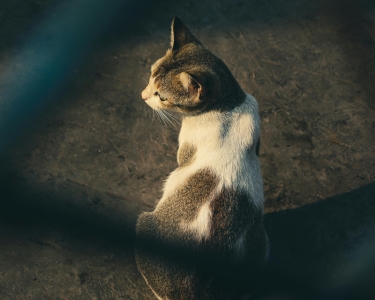
Trap-Neuter-Return, or TNR, has become the standard way of managing cats who live outdoors without an owner. Community cats are trapped, neutered and vaccinated, given a small notch in one ear so they can be recognised, and returned to where they were found. The question is whether it works, both at bringing numbers down and at making life better for the cats. Studies running over two decades and more give a fairly clear answer.
The Population Challenge
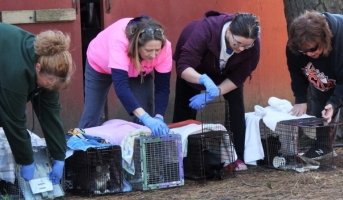
Left to themselves, cats breed quickly. A group of unneutered cats near a reliable food source can grow year on year, and the biggest colonies tend to gather around restaurants, hospital grounds, campuses and industrial sites where there's shelter and something to eat. Feeding in residential streets, done with the best of intentions, often has the same effect.
At the University of Central Florida, a volunteer-run programme has been going since 1991. A count in 1996 found 68 cats on campus. By 2019, there were ten, an 85 per cent drop, and eleven of the sixteen colonies had gone altogether. No kittens have been born on campus since 1995.
In one Chicago neighbourhood, a resident kept records of every colony she worked with over ten years. Colony numbers fell by 54 per cent from when each was first recorded and by 82 per cent from their peak. Eight of the twenty colonies disappeared entirely.
The numbers stand for something. Where there's no TNR, kittens keep arriving into hard outdoor lives, and TNR breaks that cycle. Beyond the numbers, it changes life for the individual cat...
Download and sign up to the My Feline app to read the full article...
Research rating: ⭐⭐⭐⭐ (4 of 5). Last updated 25 August 2026.
Sources
- Spehar DD, Wolf PJ. A Case Study in Citizen Science: The Effectiveness of a Trap-Neuter-Return Program in a Chicago Neighborhood. https://doi.org/10.3390/ani8010014
- Spehar DD, Wolf PJ. Back to School: An Updated Evaluation of the Effectiveness of a Long-Term Trap-Neuter-Return Program on a University's Free-Roaming Cat Population. https://doi.org/10.3390/ani9100768
- Kreisler RE, Cornell HN, Levy JK. Decrease in Population and Increase in Welfare of Community Cats in a Twenty-Three Year Trap-Neuter-Return Program in Key Largo, FL: The ORCAT Program. https://doi.org/10.3389/fvets.2019.00007
- McDonald JL, Farnworth MJ, Clements J. Integrating Trap-Neuter-Return Campaigns Into a Social Framework: Developing Long-Term Positive Behavior Change Toward Unowned Cats in Urban Areas. https://doi.org/10.3389/fvets.2018.00258
- Felicia B. Nutter, Jay F. Levine and Michael K. Stoskopf. Reproductive capacity of free-roaming domestic cats and kitten survival rate. https://doi.org/10.2460/javma.2004.225.1399