
Teary Eyes: Why Some Cat Breeds Get More Eye Discharge
Discover why certain cat breeds have frequent eye watering and staining, and learn simple ways to keep your cat comfortable and their eyes healthy.
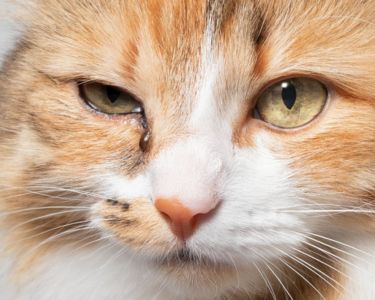
If you live with a British Shorthair, a Persian or another flat-faced cat, you'll know the watery eyes and the rusty-brown streaks that come with them. Those faces bring a few things worth understanding, and the eyes are the main one.
Certain breeds are more prone to eye discharge because of the shape of their face. Knowing why it happens, and what's normal, keeps your cat comfortable and helps you spot the rare occasion when something more is going on.
The Shape Factor
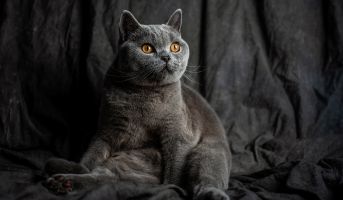
Flat-faced cats, including British Shorthairs, Persians and Exotic Shorthairs, have a head shape that changes the way tears leave the eye.
A Turkish veterinary hospital reviewed eight years of eye cases and found that tear drainage problems made up about twenty-eight per cent of them. British Shorthairs were among the breeds seen most often.
The drainage system is the issue. A shorter skull leaves the tear ducts narrower, shorter or set at a different angle, so instead of draining into the nose, tears run over onto the face. Large, round eyes sit differently in a shorter socket, which changes how the tear film sits and where it goes. And skin folds in some of these breeds hold moisture, which gives bacteria somewhere to grow.
The result is tears on the face instead of down the inside of the head, and the reddish-brown streaks under the eyes that most owners of these breeds recognise. Most of it is harmless, and it helps to know what needs a vet...
Download and sign up to the My Feline app to read the full article...
Research rating: ⭐⭐ (2 of 5). Last updated 25 August 2026.
Sources
- Bedir AG, Yanmaz LE, Okur S, Şenocak MG, Turgur F, Kocaman Y, Orhun ÖT, Ersöz U, Doğan E, Okumuş Z, Baykal B. Retrospective Analysis of Feline Ocular Diseases: Insights into Prevalence, Breed Predispositions, and Anatomical Localizations in a Veterinary Hospital in the Northeastern Anatolian Region of Turkey: 310 Cases (2016-2023). https://doi.org/10.32707/ercivet.1587417
- Oksa-Minaļto J, Maggs DJ, Akimova J, Ilgaža A, Sebbag L. Ocular surface physiology and aqueous tear secretion in cats of diverse cephalic conformations. https://doi.org/10.1111/vop.13051