
Living with Children and Cats
Creating positive relationships between cats and kids through understanding and respect
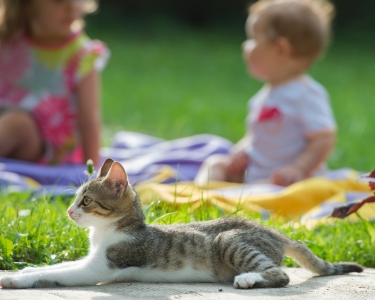
Children and cats can become close, though the friendship rarely arrives on its own. Research shows that most cats prefer adults to children, especially for being handled and for how long an interaction lasts. With a little understanding on the child's side, strong bonds still form.
Children often rank the family pet among their most important sources of comfort. When the relationship works, both the child and the cat get something from it.
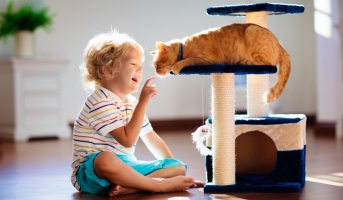
Children bring energy and enthusiasm, and cats prefer calm and predictability. Once a child learns to slow down, and a cat has a few good experiences with them, a lasting friendship tends to follow.
Growing Together Through the Years
With the youngest children, aged three to five, interactions work best gentle and brief. Young children are still learning to control their hands and to read other creatures' feelings, so they need an adult alongside to show them how to touch and when to stop. Short, supervised time together, with gentle stroking along the back or head, is what works.
Children of six to eight start to understand cats. They can begin to notice ear positions and tail movements and what they mean. Cats often warm to children in this age range, though research shows they remain less affectionate with children than with adults. A milestone at this age is learning that stroking only happens when the cat is willing.
Many pre-teens count the family pet among their most important relationships, sometimes on a par with family members. They can take on more responsibility and get to know their cat's individual likes and dislikes. And a survey of more than eight hundred families found several things that shape how well cats and children get along...
Download and sign up to the My Feline app to read the full article...
Research rating: ⭐⭐⭐⭐ (4 of 5). Last updated 25 August 2026.
Sources
- Hart LA, Thigpen AP, Willits NH, Lyons LA, Hertz-Picciotto I, Hart BL. Affectionate Interactions of Cats with Children Having Autism Spectrum Disorder. https://doi.org/10.3389/fvets.2018.00039
- Hart LA, Hart BL, Thigpen AP, Willits NH, Lyons LA, Hundenski S. Compatibility of Cats With Children in the Family. https://doi.org/10.3389/fvets.2018.00278
- Riley MR, Gibb B, Gadomski A. Household Cats and Children's Mental Health. https://doi.org/10.1037/hum0000120
- Garcia-Falgueras A. Symbiotic Relationship Human-Cats: Its Psychological and Physiological Benefits. https://doi.org/10.23880/pprij-16000398