
How Wild Cats Became Domestic Pets
The genetic journey from wild cats to household companions - what DNA tells us about domestication.

Curled up on your sofa or chasing a toy, your cat carries the genetic legacy of its wild ancestors. The journey from fierce predator to beloved pet spans thousands of years, and it's written in their DNA. These changes altered more than appearance. They shaped how cats behave and how they relate to us.
From the Desert to the Hearth
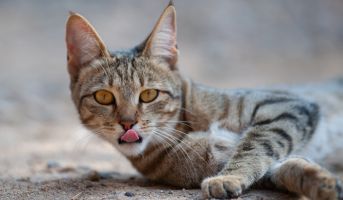
Cat domestication began around 10,000 years ago in the Fertile Crescent of the Middle East, as farming was taking hold. Humans built permanent settlements and started storing grain. Without meaning to, they created a new home for rodents. The rodents came for the grain, and wildcats followed their prey into human communities.
Some of our earliest clues come from the Mediterranean island of Cyprus. A 9,500-year-old grave, found in 2004, held a human and a cat buried 40 centimetres apart, both facing the same way. Cats weren't native to Cyprus, so people must have brought them over by boat. They already valued cats enough to carry them across the sea.
The African wildcat, a small, tawny predator from North Africa and the Middle East, is the ancestor of every domestic cat. And the friendliest of them, those most relaxed around people, gained an advantage that would shape the species...
Download and sign up to the My Feline app to read the full article...
Research rating: ⭐⭐⭐ (3 of 5). Last updated 25 August 2026.
Sources
- Montague, M.J., Li, G., Gandolfi, B., et al. Comparative analysis of the domestic cat genome reveals genetic signatures underlying feline biology and domestication. https://doi.org/10.1073/pnas.1410083111
- Vigne, J.D., Evin, A., Cucchi, T., et al. Earliest "Domestic" Cats in China Identified as Leopard Cat (Prionailurus bengalensis). https://doi.org/10.1371/journal.pone.0147295
- Grimm, D. The genes that turned wildcats into kitty cats. https://www.science.org/doi/10.1126/science.346.6211.799