
How Cats Taste Their Food
Learn about cats' unique taste preferences and why they eat the way they do.
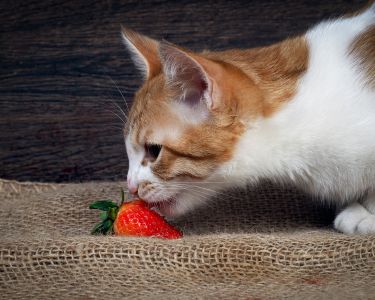
Most cats will cross the house for tuna and walk straight past a sweet treat. That is because a cat's sense of taste works differently from ours. Cats have eaten meat throughout their history, and their sense of taste has been shaped to find the nutrition meat provides. Being particular about food is part of how that system works.
Cats Have Fewer Taste Buds
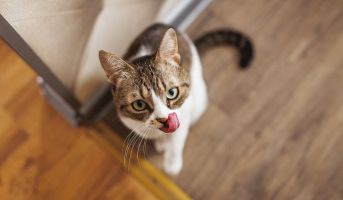
Cats have far fewer taste buds than we do, a few hundred against several thousand in people. That difference suggests they lean on other senses when judging food.
What their taste buds lack in number, they make up for in focus. They are tuned to compounds that signal the goodness in meat. Cats are obligate carnivores, which means their diet must include nutrients found only in animal flesh, and their sense of taste reflects that.
Cats can't taste sweetness. Unlike most other mammals, they are indifferent to sugar and other sweet compounds. Researchers found that the gene most animals use to taste sweetness is broken in cats. The change happened millions of years ago as cats settled into life as pure meat-eaters, switching off a sense they no longer needed.
The tastes cats do have are the ones that help them judge meat. They have a well developed umami sense, the savoury taste of protein-rich food, and they can detect bitter compounds that may warn of something poisonous. And umami turns out to explain the tuna...
Download and sign up to the My Feline app to read the full article...
Research rating: ⭐⭐⭐⭐ (4 of 5). Last updated 25 August 2026.
Sources
- McGrane SJ, Gibbs M, Hernangomez de Alvaro C, Dunlop N, Winnig M, Klebansky B, Waller D. Umami taste perception and preferences of the domestic cat (Felis catus), an obligate carnivore. https://doi.org/10.1093/chemse/bjad026
- Lei W, Ravoninjohary A, Li X, Margolskee RF, Reed DR, Beauchamp GK, Jiang P. Functional Analyses of Bitter Taste Receptors in Domestic Cats (Felis catus). https://doi.org/10.1371/journal.pone.0139670
- Li X, Li W, Wang H, Cao J, Maehashi K, Huang L, Bachmanov AA, Reed DR, Legrand-Defretin V, Beauchamp GK, Brand JG. Pseudogenization of a Sweet-Receptor Gene Accounts for Cats' Indifference toward Sugar. https://doi.org/10.1371/journal.pgen.0010003
- Pekel AY, Mülazımoğlu SB, Acar N. Taste preferences and diet palatability in cats. https://doi.org/10.1080/09712119.2020.1786391