
How Cats Learn to Trust
Understanding how cats develop trust and what helps them feel secure with their humans.
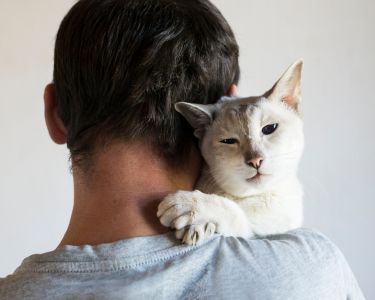
Some cats settle onto a new person's lap within the hour. Others watch from under the bed for weeks. The difference comes from a mix of early experience, the genes a cat was born with and how each day with their person goes. Research on cat and human relationships has a good deal to say about what helps a cat feel safe with people. Much of it is easy to put to use at home.

Early Experiences Matter
A cat's first weeks lay the groundwork for every relationship that follows. Kittens have a socialisation window between roughly two and seven weeks of age. Gentle, regular handling by people during that window shapes how a cat sees people for the rest of its life.
🐱 Kittens handled often during this period tend to grow into friendly, trusting adults. Kittens raised in a home with calm, everyday human contact usually become confident, affectionate cats.
Adult cats who missed that early handling can still learn to trust, though it takes longer. Dennis Turner, who has studied cat and human relationships for decades, describes how early socialisation changes what comes later.
🧠 A cat well socialised as a kitten can weather many unpleasant encounters with people before becoming wary. A few kind ones with a new owner are enough to make it friendly.
🔄 A cat poorly socialised as a kitten needs many good experiences to overcome its caution, and a single bad one can set it back.
This is why some rescue cats settle within days while others take months.
🧬 Genes play a part too. Research in cat colonies found a father effect, where kittens sired by certain males were more likely to approach and stay near people. Since tomcats have nothing to do with raising kittens, this points to something inherited rather than learned. It is less a friendliness gene than a tendency towards boldness that makes some cats quicker to approach anyone new.

The Cat Sets the Pace
Cats like to be in charge of when contact happens. Observation studies in people's homes found that the more often the human started an interaction, the less time the pair spent together overall. When the cat did the approaching, interactions lasted longer and there were more of them. Pressing attention on a cat tends to shorten the time you get.
⏱️ Households where the cat starts most of the contact end up with more contact in total. Cats warm to people who respect their timing and respond when asked.
The same studies found that trust runs both ways.
🤝 Owners who went along with their cat's wishes to interact had cats who were more willing to go along with the owner's wishes at other times.
If you respond when your cat asks, your cat is more likely to respond when you do.
Several signs show a cat is coming to see you as safe.
👋 Approaching with the tail held straight up, a greeting signal that domestic cats use with people as well as with each other.
👁️ Slow blinking at you. Researchers at the University of Sussex found that cats slow blink back at owners who slow blink at them. They are also more likely to approach a stranger who does it.
🦵 Rubbing against your legs.
🏠 Coming to find you when something has frightened them.
🗣️ Cats also talk to us. Adult cats meow mainly at people rather than at other cats, and they can recognise their owner's voice and their own name. Many develop particular sounds they use only with their household.

Different Cats, Different Bonds
Not every cat builds the same kind of bond. A University of Lincoln survey of nearly four thousand owners found five broad types of cat and owner relationship. At one end is the open relationship, where the owner is lightly invested and the cat keeps its distance. Two types, the remote association and the casual relationship, involve an owner who is fairly hands off. The difference between them is how the cat takes to other people. At the other end are two types with a closely involved owner. In a friendship, the cat is warm and sociable but content to be apart. In co-dependence, the cat wants to be near its person most of the time and is less keen on others.
Which type a pair settles into depends on a few things.
🧩 Personality. Some cats are bold and sociable by nature, others more reserved.
👤 The owner. Owner personality shapes how cats behave. Owners who score high on openness tend to have less anxious cats. More anxious owners tend to have cats who lean on them less when worried.
🏡 The home. Indoor cats tend to start more contact with their owners than cats with outdoor access, possibly because there is less else going on.
📚 Past experience. Cats remember both kind and unkind treatment, and it shapes what they expect.
Cats feel secure enough to trust when a few conditions are met. They do best when they are allowed to approach in their own time and the daily routine is predictable. High perches and hiding places to retreat to help as well. Most cats prefer to be stroked around the head and neck rather than along the back or belly. Consistency counts for a great deal, and a cat who missed out on early handling needs more time than most.
Each cat is different in how it experiences and shows trust. Watching your own cat's signals tells you more than any general rule.
Key Takeaways
🐾 The socialisation window runs from about two to seven weeks, and handling during it has lasting effects.
🐈 Cats prefer to start interactions themselves, and letting them builds more contact over time.
♻️ Trust is reciprocal. Owners who respond to their cat's wishes have cats who respond to theirs.
🎭 Personality, genes and past experience all shape how a cat learns to trust.
🔍 Signs of trust include an upright tail on approach, slow blinking, rubbing and seeking you out when scared.
👥 Cats and owners fall into five broad relationship types, from open to co-dependent.
🕰️ Routine, consistency and respect for a cat's space are the foundations of trust.
The Social Intelligence of Cats
Cats are more socially able than they are often given credit for. Experiments have shown that cats can match a human face showing an emotion with the right tone of voice. They are best at it with strong emotions like anger or happiness. They can also follow a person's gaze to find something in the room. Cats are reading us all the time. The next time your cat is studying you from across the room, it is working out what mood you are in.
Research rating: ⭐⭐⭐ (3 of 5). Last updated 25 August 2026.
Sources
- Ines M, Ricci-Bonot C, Mills DS. My Cat and Me: A Study of Cat Owner Perceptions of Their Bond and Relationship. https://doi.org/10.3390/ani11061601
- Turner DC. Unanswered Questions and Hypotheses about Domestic Cat Behavior, Ecology, and the Cat–Human Relationship. https://doi.org/10.3390/ani11102823
- Turner DC. The Mechanics of Social Interactions Between Cats and Their Owners. https://doi.org/10.3389/fvets.2021.650143
- Humphrey T, Proops L, Forman J, Spooner R, McComb K. The role of cat eye narrowing movements in cat–human communication. https://doi.org/10.1038/s41598-020-73426-0