
Hide and Seek: The Need for Hiding Places
Why cats need hiding spots and how to create them throughout your home.

Most cat owners know the sight of a cat wedged into a shoebox or vanished under the bed. Hiding is a real need rather than a quirk, tied to how safe a cat feels in the world, and research shows that a home with good hiding places is a home with a calmer cat.
Why Hiding is Essential for Cats
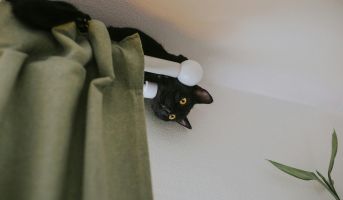
Hiding is an old survival instinct. In the wild, cats are hunters and hunted at the same time, and a safe retreat is the difference between the two. Our cats don't face those dangers, but the instinct hasn't gone anywhere.
In 2019, researchers at a Dutch animal shelter gave half of 23 newly arrived cats a cardboard hiding box and the other half nothing. All the cats calmed down over time, but the cats with a box settled about seven days sooner than the cats without one. For an animal in a strange place, a box to disappear into made a week's difference.
Hiding gives a cat control. When a cat feels overwhelmed, anxious or simply in need of quiet, a hiding spot lets them watch what's going on from somewhere safe. That's why cats vanish during noisy gatherings, when visitors arrive or after anything changes at home.
A reliable hiding place works for a cat much as a quiet room works for us. It's how they manage stress and settle themselves down. The best hiding spots share a few features...
Download and sign up to the My Feline app to read the full article...
Research rating: ⭐⭐⭐⭐ (4 of 5). Last updated 25 August 2026.
Sources
- van der Leij W.J.R., Selman L.D.A.M., Vernooij J.C.M., Vinke C.M. The effect of a hiding box on stress levels and body weight in Dutch shelter cats; a randomized controlled trial. https://doi.org/10.1371/journal.pone.0223492
- de Oliveira A.S., Terçariol C.A.S., Genaro G. The Use of Refuges by Communally Housed Cats. https://doi.org/10.3390/ani5020245