
Does the way your cat communicates with you vocally change with age?
Understanding how your cat's meowing and vocal communication changes as they get older and what this means for their wellbeing
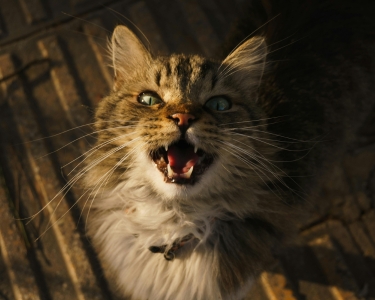
Many owners of older cats notice that their cat who barely said a word for a decade starts calling out, often at night and often louder than before. Two large UK surveys asked owners of cats aged eleven and over about it. Around six in ten of those cats had become more vocal. Some of that is ordinary ageing. Some of it points to conditions your vet can treat.
Why Older Cats Get Louder
The two surveys were run fifteen years apart, one in 1995 and one between 2010 and 2015. Between them they covered around two thousand cats, and they told much the same story. Around six in ten cats vocalised more during the day, and the older the cat, the more likely it was. Between a third and a half called out at night as well. Owners said the extra crying usually began at about thirteen years of age.
In the more recent survey, roughly one in eight elderly cats had lost some or all of their hearing. A cat who can't hear itself properly tends to call more loudly without realising it. Deaf cats in the survey were far more likely than hearing cats to have become more vocal. The difference was strongest at night.
Older cats can also develop cognitive dysfunction syndrome, which is the cat version of dementia. Earlier studies suggest it affects roughly a third of cats aged seven to fourteen, and about half of cats aged fifteen or older. Increased vocalisation, especially at night, is one of its clearest signs.
So what is an older cat trying to say when they call out? A team at the University of Edinburgh asked the owners...
Download and sign up to the My Feline app to read the full article...
Research rating: ⭐⭐⭐ (3 of 5). Last updated 25 August 2026.
Sources
- Sordo L, Breheny C, Halls V, Cotter A, Tørnqvist-Johnsen C, Caney SMA, Gunn-Moore DA. Prevalence of Disease and Age-Related Behavioural Changes in Cats: Past and Present. https://doi.org/10.3390/vetsci7030085
- Pittari J, Rodan I, Beekman G, et al. Feline ageing. https://doi.org/10.1016/j.jfms.2009.07.011
- Černá P, Gardiner H, Sordo L, Tørnqvist-Johnsen C, Gunn-Moore DA. Potential Causes of Increased Vocalisation in Elderly Cats with Cognitive Dysfunction Syndrome as Assessed by Their Owners. https://doi.org/10.3390/ani10061092