
Brushing Different Coat Types: What Works Best
Understanding how to groom different types of cat coats effectively and make it an enjoyable experience.
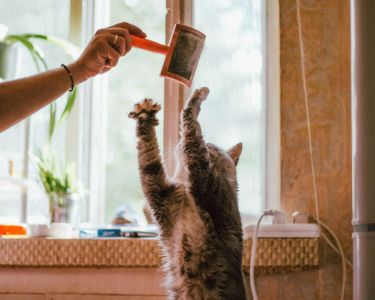
Every cat's coat is its own, whether sleek and short, plush and medium or long enough to need daily attention. Brushing keeps the house a little less furry, which is a nice bonus, but the real benefit is to the cat. It removes loose hair before it's swallowed, spreads natural oils through the coat and gives you a regular look at the skin underneath.
Different coats need different approaches, and grooming that suits a Devon Rex does little for a Persian.
Understanding Your Cat's Natural Grooming Behaviour
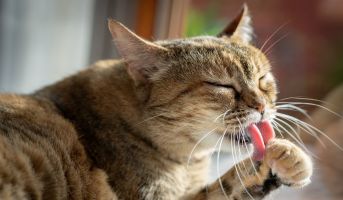
Cats are thorough groomers, and estimates suggest they spend up to 30% of their waking hours licking and cleaning themselves. The tongue does most of the work. It's covered in hundreds of tiny backward-facing spines, and research has shown these spines are hollow, working like miniature scoops that draw saliva down through the fur to the skin. Engineers studying the mechanism have even built a brush modelled on it, which cleans more effectively and is easier to clear of hair than an ordinary brush.
Cats are good at this, and they still benefit from our help. Brushing lifts out loose hair before it's swallowed, spreads the coat's natural oils, gets the blood moving in the skin and gives you a chance to spot problems early. For long-haired cats, help from a person is what stands between them and painful mats they can't deal with on their own.
The amount of brushing a coat needs rises with its length, and the right tools depend on the coat...
Download and sign up to the My Feline app to read the full article...
Research rating: ⭐⭐ (2 of 5). Last updated 25 August 2026.
Sources
- Alexis C. Noel and David L. Hu. Cats use hollow papillae to wick saliva into fur. https://doi.org/10.1073/pnas.1809544115
- Mickael Weber, Laura Sams, Alexandre Feugier, Sandrine Michel and Vincent Biourge. Influence of the dietary fibre levels on faecal hair excretion after 14 days in short and long-haired domestic cats. https://doi.org/10.1002/vms3.6