
Advances in Pain Detection
New tools and methods for identifying and measuring pain in cats
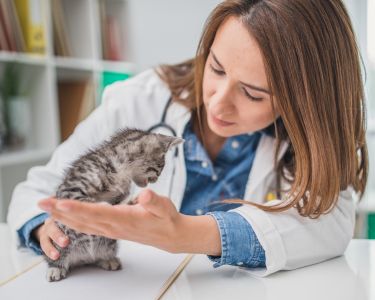
Spotting pain in a cat has long been one of the hardest jobs for vets and owners alike. Cats evolved to hide any sign of weakness, pain included, which kept them safe in the wild and makes them very good at suffering quietly at home.
In the last decade or so, researchers have built measurement tools, studied facial expressions and agreed on a list of behavioural signs, all of which make hidden pain easier to see.
How Pain Detection Has Changed

Vets once relied on heart rate and blood pressure, or on a best guess from how the cat was behaving. There are now standard tools that pick up pain reliably across a range of conditions.
The main one is the Glasgow Composite Measure Pain Scale for cats. It scores posture, attention to a wound, response to being handled and facial expression. The facial part turned out to matter a great deal, because researchers found that ear position, muzzle shape, whisker position and how far the eyes are open all change when a cat is in pain.
In 2017, the Glasgow team tested the scale on cats at several veterinary hospitals. A score of five or more, out of a possible twenty, means the cat needs pain relief. That gives vets a clear line to work to rather than a judgement call.
Facial changes are harder for a cat to mask than the rest of their behaviour, and researchers have found five changes in particular that set a cat in pain apart...
Download and sign up to the My Feline app to read the full article...
Research rating: ⭐⭐⭐⭐ (4 of 5). Last updated 25 August 2026.
Sources
- Reid J, Scott EM, Calvo G, Nolan AM. Definitive Glasgow acute pain scale for cats: validation and intervention level. https://doi.org/10.1136/vr.104208
- Holden E, Calvo G, Collins M, Bell A, Reid J, Scott EM, Nolan AM. Evaluation of facial expression in acute pain in cats. https://doi.org/10.1111/jsap.12283
- Merola I, Mills DS. Behavioural Signs of Pain in Cats: An Expert Consensus. https://doi.org/10.1371/journal.pone.0150040
- Stadig S, Lascelles BDX, Nyman G, Bergh A. Evaluation and comparison of pain questionnaires for clinical screening of osteoarthritis in cats. https://doi.org/10.1136/vetrec-2018-105115